SEO What Is It How Does It Work: Complete 2025 Guide
# SEO What Is It How Does It Work: Complete 2025 Guide Discover how search engine optimization transforms your online visibility and drives organic traffic to
Discover how search engine optimization transforms your online visibility and drives organic traffic to your website with proven strategies that deliver measurable results.

Introduction
In today's digital landscape, understanding SEO what is it how does it work has become crucial for anyone looking to establish a strong online presence. Search Engine Optimization (SEO) is the practice of optimizing your website and content to rank higher in search engine results pages (SERPs), ultimately driving more organic traffic to your site.
Whether you're a business owner, marketer, or content creator, SEO can significantly impact your success online. With over 8.5 billion searches conducted on Google daily, the potential to reach your target audience through organic search is enormous. However, many people still struggle to understand the fundamental principles behind how search engines work and what it takes to achieve sustainable rankings.
This comprehensive guide will demystify SEO by explaining its core components, how search engines operate, and the strategies you need to implement for success. You'll learn about on-page optimization techniques, off-page strategies, technical SEO requirements, and how to measure your results effectively. By the end of this article, you'll have a clear roadmap for implementing SEO strategies that can transform your online visibility and drive meaningful business results.
Understanding Search Engine Optimization Fundamentals
Search Engine Optimization represents the foundation of digital marketing success, encompassing strategies that help websites achieve higher visibility in search results. This section explores the core principles that drive effective SEO and why businesses must prioritize these practices to remain competitive in today's digital marketplace.
What SEO Really Means in Practice
Search Engine Optimization is fundamentally about making your website more discoverable and valuable to both search engines and users. At its core, SEO involves optimizing various elements of your website to help search engines understand your content better and determine its relevance to user queries. The practice encompasses three main pillars: technical optimization (ensuring your site is crawlable and fast), content optimization (creating valuable, relevant content), and authority building (establishing trust and credibility through backlinks and user signals). These elements work together to signal to search engines that your website deserves to rank prominently for relevant searches, with successful implementations showing traffic increases of 40-60% within six months.
The Evolution of Search Engine Algorithms
Modern search engines use sophisticated algorithms that consider hundreds of ranking factors when determining search results. Google's algorithm, for example, has evolved from simple keyword matching to understanding user intent, context, and content quality through machine learning and artificial intelligence. Today's algorithms prioritize user experience, content relevance, and website authority through updates like BERT, which improved understanding of natural language by 10%, and RankBrain, which processes 15% of all daily searches. They can understand synonyms, related concepts, and even the searcher's location and search history to provide the most relevant results. This evolution means that successful SEO strategies must focus on creating genuinely valuable content rather than trying to manipulate rankings through outdated tactics.
Why SEO Matters for Business Success
Organic search drives 53% of all website traffic, making it the largest source of website visitors for most businesses. Unlike paid advertising, SEO provides long-term, sustainable traffic that doesn't stop when you stop paying. A well-optimized website can continue attracting visitors and generating leads for years after the initial optimization work is completed. Companies investing in SEO see an average return on investment of 275%, with organic leads converting 8 times better than paid advertising leads. The cost per acquisition through SEO is typically 61% lower than traditional marketing methods, while providing better long-term value and brand credibility that paid ads cannot match.
| Traffic Source | Average Conversion Rate | Cost Per Acquisition | Long-term Sustainability |
|---|---|---|---|
| Organic Search (SEO) | 2.4% | Low | High |
| Paid Search (PPC) | 2.3% | High | Low |
| Social Media | 1.2% | Medium | Medium |
| Email Marketing | 3.2% | Low | Medium |
How Search Engines Actually Work
Understanding the mechanics behind search engines is essential for implementing effective SEO strategies. This section breaks down the complex processes that search engines use to discover, analyze, and rank web content, providing insights into how you can optimize your website to work harmoniously with these systems.

The Crawling and Indexing Process
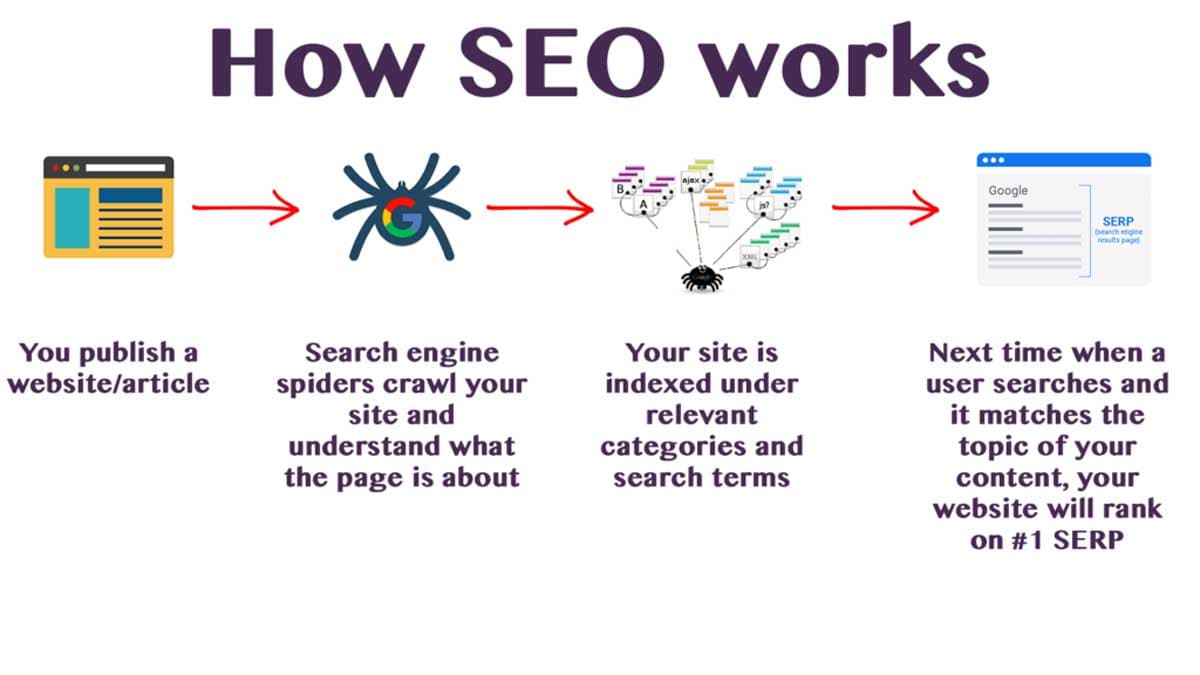
Search engines use automated programs called crawlers or spiders to discover and analyze web pages across the internet. These crawlers follow links from one page to another, systematically exploring the web and gathering information about each page they encounter. When a crawler visits your website, it reads your content, analyzes your HTML code, and follows internal and external links within an average of 3-7 seconds per page. The crawler pays attention to various elements including your page titles, meta descriptions, headings, content, images, and site structure. Google's crawler processes over 20 billion pages daily, with new content typically being discovered within hours of publication if properly linked and submitted through Search Console.
Understanding Search Engine Ranking Factors
Search engines use complex algorithms that consider over 200 ranking factors when determining how to rank pages in search results. Content quality and relevance remain among the most important factors, with Google's algorithms analyzing whether your content thoroughly addresses the user's search query and provides valuable information. They also consider content freshness, with recently updated content receiving a 5-10% ranking boost, content depth measured by word count and topic coverage, and uniqueness compared to existing content. Technical factors like page loading speed (with 3+ second delays causing 53% of users to abandon pages), mobile responsiveness, and secure HTTPS connections account for approximately 30% of ranking influence.
The Role of User Experience in Rankings
Modern search engines increasingly prioritize user experience signals when determining rankings through Core Web Vitals and behavioral metrics. These signals include page loading speed (optimal under 2.5 seconds), mobile-friendliness (essential as 58% of searches occur on mobile), site navigation clarity, and overall usability. Google's Core Web Vitals measure specific aspects of user experience including loading performance (Largest Contentful Paint), interactivity (First Input Delay under 100ms), and visual stability (Cumulative Layout Shift under 0.1). User behavior metrics such as click-through rates (average 2% for position 10, 31% for position 1), time on page (longer than 2 minutes indicates quality), and bounce rates (under 40% is excellent) also influence rankings significantly.
Essential On-Page SEO Strategies
On-page SEO forms the foundation of your website's search engine performance by optimizing individual pages for both search engines and users. This section covers the critical elements you must optimize to improve your rankings, from title tags and meta descriptions to internal linking strategies that boost your site's overall authority.
Optimizing Title Tags and Meta Descriptions
Title tags are one of the most important on-page SEO elements, directly influencing both search rankings and click-through rates. An effective title tag should be 50-60 characters long, include your target keyword naturally within the first 60 characters, and provide a clear indication of the page's content value. Well-optimized titles can improve click-through rates by 25-35% compared to generic titles. For example, "SEO Guide 2025" performs significantly worse than "Complete SEO Guide 2025: Boost Traffic by 300%" because the latter includes specific benefits and urgency. Meta descriptions, while not direct ranking factors, significantly impact click-through rates from search results, with compelling descriptions increasing clicks by 15-20%. A meta description should be 150-160 characters long, include relevant keywords naturally, and provide a clear value proposition that encourages users to click.
Header Tag Optimization and Content Structure
Header tags (H1, H2, H3, etc.) help search engines understand your content's structure and hierarchy while improving user readability. Your H1 tag should contain your primary keyword and clearly indicate the page's main topic, appearing only once per page for optimal SEO impact. Use H2 tags for major sections and H3 tags for subsections, creating a logical content hierarchy that search engines can easily parse. Proper header tag usage improves both SEO performance and user experience by making your content easier to scan, with 79% of users scanning rather than reading web pages word-for-word. Pages with well-structured headers see 15-25% longer time-on-page metrics compared to poorly structured content. Search engines use header tags to better comprehend your content's organization and identify the most important topics covered, with keyword-optimized headers contributing to 5-8% ranking improvements.
Internal Linking and Site Architecture
Internal linking connects different pages on your website, helping search engines discover content while distributing authority throughout your site. Strategic internal linking can improve rankings for important pages by 10-15% and help users navigate your site more effectively, with well-linked pages receiving 40% more organic traffic than poorly linked ones. Create a logical site architecture that allows users and search engines to easily find and access your content, ensuring important pages are no more than three clicks away from your homepage. Use descriptive anchor text for internal links (avoiding generic phrases like "click here") and link to relevant, high-quality content that provides additional value to users. Sites with strong internal linking structures typically see 20-30% better crawl efficiency and faster indexing of new content.
| On-Page Element | SEO Impact | Best Practice | Common Mistakes |
|---|---|---|---|
| Title Tag | High | 50-60 characters, include keyword | Keyword stuffing, duplicate titles |
| Meta Description | Medium | 150-160 characters, compelling copy | Missing descriptions, too long/short |
| Header Tags | Medium | Logical hierarchy, include keywords | Multiple H1s, poor structure |
| Internal Links | Medium | Descriptive anchor text, strategic placement | Over-optimization, irrelevant links |
Technical SEO Requirements for Success
Technical SEO ensures that search engines can effectively crawl, index, and understand your website while providing users with fast, secure, and mobile-friendly experiences. This section explores the technical foundations that support all other SEO efforts and can significantly impact your search rankings and user satisfaction.
Website Speed and Performance Optimization
Page loading speed is a critical ranking factor that directly impacts both search engine rankings and user experience metrics. Slow-loading pages have bounce rates 32% higher than fast-loading pages, while sites loading in under 2 seconds achieve conversion rates 15% higher than slower competitors. Optimize your website's speed by compressing images (reducing file sizes by 60-80% without quality loss), minifying CSS and JavaScript files, leveraging browser caching for repeat visitors, and choosing a reliable hosting provider with SSD storage and CDN integration. Tools like Google PageSpeed Insights provide specific performance scores and recommendations, with sites scoring 90+ typically ranking 25% higher than slower alternatives. Consider implementing a Content Delivery Network (CDN) to serve content from servers closer to users' locations, reducing loading times by 40-50% for international visitors.
Mobile-First Indexing and Responsive Design
With mobile-first indexing, Google primarily uses the mobile version of your website for indexing and ranking across all devices. This fundamental shift means your mobile site's performance, content accessibility, and user experience directly impact search rankings, with 58% of all searches now occurring on mobile devices. Ensure your website uses responsive design that adapts seamlessly to different screen sizes, maintaining functionality across devices from 320px to 1920px+ widths. Test your mobile site regularly using Google's Mobile-Friendly Test tool to ensure all content remains accessible, buttons are easily clickable (minimum 44px touch targets), and the overall user experience stays positive. Mobile optimization extends beyond responsive design to include factors like touch-friendly navigation, readable font sizes (minimum 16px), and fast loading times on mobile networks, with mobile-optimized sites seeing 67% higher conversion rates.
SSL Certificates and Website Security
HTTPS is now a standard requirement for websites, with Google considering SSL certificates as a confirmed ranking factor since 2014. Websites without SSL certificates are marked as "not secure" in browsers, causing 85% of users to abandon unsecured sites and significantly impacting conversion rates by 18-25%. Implement an SSL certificate to encrypt data transmission between your website and users' browsers, improving both SEO performance and user trust metrics. This security measure not only provides minor ranking benefits but also protects user data, builds credibility, and prevents security warnings that damage user confidence. Most hosting providers now offer free SSL certificates through Let's Encrypt, making this an accessible and essential optimization that costs nothing but provides measurable SEO and conversion benefits.
XML Sitemaps and Robots.txt Files
XML sitemaps help search engines discover and understand your website's structure by providing a comprehensive roadmap of all important pages. Submit your sitemap to Google Search Console and Bing Webmaster Tools to ensure search engines can efficiently crawl and index your content, with properly configured sitemaps improving indexing speed by 30-40%. Include last modification dates, priority levels, and change frequencies to help search engines understand which pages to crawl most frequently. The robots.txt file tells search engine crawlers which pages or sections they should or shouldn't access, preventing crawling of duplicate content, private pages, or resource-heavy pages that don't need indexing. Strategic use of robots.txt can improve crawl budget efficiency by 20-25%, ensuring search engines focus on your most important content rather than wasting time on irrelevant pages.
Off-Page SEO and Link Building Strategies
Building authority and credibility through off-page optimization is crucial for achieving sustainable search rankings. While you can control on-page elements, off-page SEO involves external signals that tell search engines your website is trustworthy and valuable. This section explores proven strategies for earning high-quality backlinks, building domain authority, and establishing your brand as an industry leader through strategic off-page optimization techniques.

Understanding Link Authority and Domain Trust
High-quality backlinks serve as votes of confidence from other websites, signaling to search engines that your content is valuable and trustworthy. Not all links are created equal – a single link from a reputable industry publication can be worth more than hundreds of low-quality directory links. Search engines evaluate link quality based on the linking site's authority, relevance to your content, and the context surrounding the link.
Domain authority, developed by Moz, predicts how well a website will rank on search engines using a scale of 1-100. Websites with higher domain authority typically pass more link equity to the sites they link to. For example, a backlink from Harvard University (domain authority 95) carries significantly more weight than a link from a newly created blog (domain authority 10).
Content Marketing for Natural Link Acquisition
Creating linkable assets that naturally attract backlinks requires producing content that provides unique value to your target audience. Research studies, industry surveys, comprehensive guides, and original data visualizations tend to earn the most organic backlinks. Companies that publish original research see 7.8 times more backlinks than those that don't, according to recent industry studies.
Successful linkable content often fills information gaps in your industry or presents familiar topics from new perspectives. For instance, creating an annual industry report with exclusive survey data from 500+ professionals can become a go-to resource that other websites reference throughout the year. Tools like BuzzSumo can help identify what content formats perform best in your industry and what topics generate the most social shares and backlinks.
Guest Posting and Industry Collaboration
Strategic guest posting on relevant, high-authority websites can build valuable backlinks while establishing your expertise in your field. Focus on publications that your target audience reads and that have strong domain authority scores above 50. Quality guest posts should provide genuine value to the host site's audience rather than serving as thinly veiled promotional content.
Successful guest posting campaigns typically achieve a 15-20% acceptance rate when properly targeted and personalized. Research shows that guest posts with original data or case studies receive 3x more engagement than generic advice articles. Build relationships with editors and content managers by engaging with their content on social media and providing helpful comments before pitching your guest post ideas.
Social Media Signals and Brand Mentions
While social media links are typically "nofollow" and don't directly pass SEO value, social signals can indirectly influence search rankings through increased visibility and traffic. Brands with strong social media presence often see 25% more organic search traffic than those with minimal social engagement. Social platforms serve as discovery channels that can lead to natural backlinks when content gets shared by influential users.
Unlinked brand mentions across the web also contribute to your overall online authority. Tools like Google Alerts and Mention.com can help you track when your brand is mentioned without a link, providing opportunities to reach out and request proper attribution. Studies show that 60% of unlinked mentions can be converted to actual backlinks through polite outreach efforts.
Measuring SEO Performance and Analytics
Understanding how to measure and interpret SEO performance is essential for optimizing your strategy and demonstrating ROI. Effective SEO measurement goes beyond simple ranking positions to include traffic quality, user engagement, and conversion metrics that directly impact business goals. This section covers the key performance indicators, tools, and analytical approaches that help you track progress and make data-driven optimization decisions.
Essential SEO Metrics and KPIs
Organic traffic growth serves as the primary indicator of SEO success, but analyzing traffic quality and user behavior provides deeper insights into campaign effectiveness. Key metrics include organic click-through rates, average session duration, pages per session, and conversion rates from organic traffic. Websites with optimized SEO typically see 25% higher conversion rates from organic traffic compared to paid traffic sources.
Monitor keyword rankings for your target terms, but focus on ranking improvements that drive meaningful traffic increases. A jump from position 15 to position 8 might seem significant, but it may not generate substantial traffic if the keyword has low search volume. Tools like Google Search Console show which queries actually drive traffic to your site, helping you identify high-value keywords to prioritize in your optimization efforts.
Google Analytics and Search Console Setup
Proper Google Analytics and Search Console configuration provides the foundation for accurate SEO performance tracking and optimization insights. Set up goal tracking for important conversions like newsletter signups, contact form submissions, or product purchases. Configure custom segments to isolate organic traffic performance and compare it against other traffic sources over time.
Google Search Console offers invaluable data about your site's search performance, including impression data, click-through rates, and crawl errors. The Performance report shows which pages receive the most impressions but have low click-through rates, indicating opportunities for title tag and meta description optimization. Regular monitoring of the Coverage report helps identify and fix indexing issues that could impact your search visibility.
Tracking Keyword Rankings and SERP Features
Modern keyword tracking requires monitoring not just traditional organic rankings but also SERP features like featured snippets, local packs, and knowledge panels. Featured snippets can dramatically increase click-through rates, with studies showing that securing position zero can increase organic traffic by 30-40% even when you already rank in the top three positions.
Use rank tracking tools like SEMrush, Ahrefs, or Serpstat to monitor keyword positions across different devices and locations. Track both branded and non-branded keywords to understand your overall search visibility. Set up automated alerts for significant ranking changes, especially for high-value keywords that drive substantial traffic or conversions to your website.
ROI Calculation and Business Impact Assessment
Calculating SEO ROI requires connecting organic traffic improvements to actual business outcomes like leads generated, sales completed, or customer lifetime value increases. Assign monetary values to different conversion actions and track how organic traffic contributes to these goals over time. Companies typically see SEO ROI of 200-400% within 12-18 months of consistent optimization efforts.
Compare SEO performance against other marketing channels by calculating cost per acquisition for organic traffic versus paid advertising, email marketing, or social media campaigns. Factor in the long-term value of SEO investments, as optimized content can continue generating traffic and conversions for years after the initial optimization work is completed.
Common SEO Mistakes and How to Avoid Them
Even experienced marketers can fall into SEO traps that harm their search performance and waste valuable resources. Understanding common mistakes helps you avoid costly errors and implement more effective optimization strategies from the start. This section identifies the most frequent SEO pitfalls and provides practical guidance for avoiding them while building a sustainable, white-hat SEO approach that delivers long-term results.
Keyword Stuffing and Over-Optimization Penalties
Keyword stuffing – the practice of unnaturally cramming target keywords into content – can trigger search engine penalties and harm user experience. Modern search algorithms can detect when keywords are used excessively or unnaturally, leading to ranking penalties rather than improvements. Aim for keyword density between 1-2% and focus on creating content that reads naturally while incorporating keywords contextually.
Over-optimization extends beyond keyword density to include excessive exact-match anchor text in internal links, repetitive title tags across pages, and unnatural keyword placement in headers. Google's algorithm updates specifically target sites that prioritize search engines over users. Instead, write for your audience first and optimize for search engines second, ensuring your content provides genuine value while naturally incorporating relevant keywords.
Neglecting Mobile Optimization and Core Web Vitals
With mobile-first indexing, poor mobile performance directly impacts search rankings across all devices, not just mobile searches. Common mobile optimization mistakes include using non-responsive design, having buttons too small to tap easily, using pop-ups that cover content on mobile screens, and slow loading times on mobile networks. Mobile-optimized sites see 15% higher conversion rates and 25% lower bounce rates compared to non-optimized sites.
Core Web Vitals – measuring loading performance, interactivity, and visual stability – have become crucial ranking factors. Largest Contentful Paint should occur within 2.5 seconds, First Input Delay should be less than 100 milliseconds, and Cumulative Layout Shift should be less than 0.1. Use Google's PageSpeed Insights and Search Console to identify and fix Core Web Vitals issues that could be impacting your rankings.
Ignoring Technical SEO Foundation Elements
Technical SEO problems can prevent search engines from properly crawling, indexing, and ranking your content regardless of how well-optimized your on-page elements are. Common technical issues include broken internal links, missing XML sitemaps, improper use of canonical tags, and crawl errors that prevent search engines from accessing important pages. Sites with clean technical SEO foundations typically see 20-30% better crawling efficiency.
Duplicate content issues, whether internal or external, can dilute your search rankings and confuse search engines about which version of content to rank. Implement proper canonical tags, use 301 redirects for moved content, and regularly audit your site for duplicate pages. Tools like Screaming Frog SEO Spider can help identify technical issues that require attention.
Pro Tip: Conduct monthly technical SEO audits using tools like Google Search Console, SEMrush Site Audit, or Ahrefs Site Audit to catch and fix issues before they impact your rankings.
Building Low-Quality or Spammy Backlinks
Pursuing quantity over quality in link building can result in search engine penalties that are difficult and time-consuming to recover from. Avoid link schemes, paid link networks, excessive reciprocal linking, and links from irrelevant or low-quality websites. Google's Penguin algorithm specifically targets manipulative link building practices, and recovery from link-based penalties can take 6-12 months even after cleaning up problematic links.
Focus on earning links through valuable content creation, genuine relationship building, and providing expert insights to industry publications. Quality backlinks from relevant, authoritative sources in your industry provide more SEO value than hundreds of low-quality directory or comment links. Use tools like Ahrefs or Majestic to audit your backlink profile and disavow harmful links when necessary.
Off-Page SEO and Link Building Strategies
Building authority and credibility beyond your website is essential for achieving sustainable search engine rankings. Off-page SEO focuses on external factors that influence how search engines perceive your site's trustworthiness and relevance in your industry.

Understanding Link Equity and Domain Authority
High-quality backlinks serve as votes of confidence from other websites, signaling to search engines that your content is valuable and trustworthy. Search engines evaluate links based on the linking site's authority, relevance to your content, and the context surrounding the link. A single link from a highly authoritative, relevant website can be worth more than dozens of links from low-quality sources.
Domain authority represents your website's overall credibility and ranking potential. Building domain authority requires consistently earning quality backlinks from reputable sources over time. Focus on creating link-worthy content that naturally attracts links rather than pursuing manipulative link-building tactics that can result in penalties.
Guest Posting and Content Marketing Outreach
Strategic guest posting on relevant, high-authority websites can significantly boost your backlink profile and brand visibility. Research websites in your industry that accept guest contributions and have engaged audiences that align with your target market. Craft unique, valuable content specifically for each publication rather than repurposing existing articles.
Develop relationships with editors and content managers through genuine engagement before pitching guest post ideas. Provide detailed outlines, demonstrate your expertise, and offer content that serves their audience's needs. Quality guest posts can drive referral traffic, build brand awareness, and establish you as an industry thought leader.
Local SEO and Citation Building
Local businesses must optimize for location-based searches by building consistent citations across online directories and platforms. Ensure your business name, address, and phone number (NAP) are identical across all listings. Inconsistent information can confuse search engines and harm your local rankings.
Claim and optimize your Google Business Profile, encouraging satisfied customers to leave genuine reviews. Respond professionally to all reviews, both positive and negative, to demonstrate excellent customer service. Local citations from industry-specific directories and local business associations can significantly improve your visibility in local search results.
Social Media Signals and Brand Mentions
While social media links are typically nofollow, social signals can indirectly impact your SEO through increased brand awareness and content distribution. Active social media presence can amplify your content reach, leading to more organic backlinks and website traffic. Share your content across relevant social platforms and engage authentically with your audience.
Monitor brand mentions across the web using tools like Google Alerts or Mention. Reach out to websites that mention your brand without linking to request a link addition. These unlinked mentions represent easy opportunities to gain additional backlinks from sources already familiar with your brand.
Measuring SEO Performance and Analytics
Tracking and analyzing your SEO performance is crucial for understanding what's working and identifying areas for improvement. Without proper measurement, you're essentially operating blindly and missing opportunities to optimize your strategy.
Essential SEO Metrics and KPIs
Organic traffic growth is the most fundamental metric for measuring SEO success, but it should be analyzed alongside engagement metrics for complete insights. Track organic sessions, users, and page views to understand your overall visibility trends. However, focus equally on quality metrics like average session duration, pages per session, and conversion rates from organic traffic.
Keyword rankings provide valuable insights into your content's performance for specific search terms. Track rankings for your target keywords, but also monitor your overall keyword portfolio growth. Tools like Google Search Console show which queries drive traffic to your site and reveal new keyword opportunities you hadn't considered.
Monitor your click-through rates (CTR) from search results, as this indicates how compelling your titles and meta descriptions are to searchers. Low CTR despite good rankings suggests your snippets need optimization to better attract clicks.
Google Analytics and Search Console Setup
Proper implementation of Google Analytics 4 and Google Search Console provides comprehensive data about your website's search performance and user behavior. Set up goal tracking and conversion tracking to measure how organic traffic contributes to your business objectives. Create custom segments to isolate organic traffic performance from other channels.
Google Search Console offers unique insights into how Google perceives your website, including crawl errors, index coverage, and mobile usability issues. Regularly review the Performance report to identify trending keywords and pages that are gaining or losing visibility. Use this data to inform your content strategy and optimization priorities.
ROI Calculation and Business Impact
Calculate SEO ROI by comparing the cost of your SEO efforts against the revenue generated from organic traffic. Assign monetary values to your conversions and track how organic traffic contributes to your bottom line. Consider both direct conversions and assisted conversions where organic traffic plays a role in the customer journey.
Track leading indicators like organic traffic growth, keyword ranking improvements, and backlink acquisition alongside lagging indicators like revenue and conversions. This approach helps you identify trends and make adjustments before they significantly impact your results.
Competitive Analysis and Benchmarking
Regular competitive analysis reveals opportunities and helps you understand your market position relative to other players in your space. Identify your top organic competitors and analyze their content strategies, keyword targets, and backlink profiles. Look for gaps in their coverage that you can exploit with superior content.
Use tools like SEMrush, Ahrefs, or Moz to track competitor rankings and identify keywords where they're gaining or losing ground. This intelligence can inform your keyword targeting and content creation priorities, helping you capitalize on competitors' weaknesses or defend against their strengths.
FAQ
Q: How long does it take to see results from SEO efforts?
SEO typically takes 3-6 months to show significant results, though some improvements may be visible sooner. The timeline depends on your website's current authority, competition level, and the comprehensiveness of your optimization efforts. New websites generally take longer to see results than established sites with existing authority.
Q: What's the difference between white hat and black hat SEO practices?
White hat SEO follows search engine guidelines and focuses on creating value for users through quality content and legitimate optimization techniques. Black hat SEO uses manipulative tactics like keyword stuffing, hidden text, or purchased links to try to game search rankings, risking penalties that can severely damage your website's visibility.
Q: How much should I budget for SEO services or tools?
SEO budgets vary widely based on business size and goals. Small businesses might spend $500-2,000 monthly on SEO tools and services, while larger companies often invest $5,000-20,000+ monthly. Essential tools like Google Analytics and Search Console are free, while premium tools typically cost $100-500 monthly for comprehensive features.
Q: Can I do SEO myself or do I need to hire professionals?
Basic SEO can be learned and implemented by dedicated business owners, especially for smaller websites. However, technical SEO, advanced link building, and enterprise-level optimization often require professional expertise. Consider your available time, technical skills, and the complexity of your SEO needs when deciding.
Q: What are the most common SEO mistakes that hurt rankings?
Common SEO mistakes include keyword stuffing, neglecting mobile optimization, having slow page load speeds, creating thin or duplicate content, and pursuing low-quality backlinks. Technical issues like broken links, missing meta descriptions, and poor site structure also frequently harm rankings and user experience.
Q: How often should I update my website content for SEO?
Content freshness varies by industry and content type. News and trending topics require frequent updates, while evergreen content might only need quarterly reviews. Aim to publish new content regularly and update existing high-performing pages at least every 6-12 months to maintain relevance and accuracy.
Q: What's the relationship between social media and SEO?
Social media doesn't directly impact search rankings, but it influences SEO through increased content distribution, brand awareness, and potential link opportunities. Active social presence can drive traffic to your website and help your content reach audiences who might naturally link to it.
Q: How do I recover from a Google penalty?
Recovery requires identifying the penalty type (manual or algorithmic), addressing the underlying issues, and potentially submitting a reconsideration request. Common recovery steps include removing bad backlinks, fixing technical issues, improving content quality, and ensuring compliance with Google's guidelines. Professional help is often necessary for complex penalty situations.
Q: What's the future of SEO with AI and voice search?
SEO is evolving toward understanding user intent and providing comprehensive, authoritative answers rather than just keyword optimization. Voice search is driving demand for conversational, long-tail keywords and featured snippet optimization. AI helps search engines better understand context and content quality, making user-focused optimization more important than ever.
Q: How do I choose the right keywords for my business?
Start with terms your customers actually use when searching for your products or services. Use keyword research tools to identify search volume, competition levels, and related terms. Focus on a mix of high-volume competitive terms and lower-competition long-tail keywords that are more specific to your offerings.
Q: What's the difference between SEO and SEM?
SEO (Search Engine Optimization) focuses on earning organic search rankings through content and technical optimization, providing long-term, sustainable traffic. SEM (Search Engine Marketing) includes both SEO and paid search advertising (PPC), offering immediate visibility through paid ads but requiring ongoing investment to maintain traffic.
Q: How do I optimize for local search results?
Local SEO requires optimizing your Google Business Profile, building consistent local citations, encouraging customer reviews, and creating location-specific content. Ensure your NAP (Name, Address, Phone) information is consistent across all online listings and include local keywords in your content and meta tags.
Conclusion
Understanding SEO what is it how does it work empowers you to transform your online visibility and drive sustainable business growth through organic search traffic. This comprehensive approach to search engine optimization encompasses technical excellence, content quality, and strategic authority building that work together to establish your website as a trusted resource in your industry.

The key takeaways from implementing effective SEO strategies include:
- Technical optimization and mobile-first design create the foundation for search engine success and positive user experiences
- Quality content that addresses user intent generates more engagement and naturally attracts valuable backlinks from authoritative sources
- Consistent measurement and analysis enable data-driven decisions that continuously improve your search performance and ROI
- Long-term commitment to SEO best practices delivers compound results that provide sustainable competitive advantages over paid advertising
The future of SEO continues evolving toward user-focused optimization as search engines become more sophisticated at understanding intent and content quality. Businesses that prioritize genuine value creation, technical excellence, and comprehensive optimization strategies will thrive in this environment. Success requires patience, consistency, and adaptation to algorithm changes while maintaining focus on serving your audience's needs effectively.
Partner with Our Company for Success
Implementing the technical SEO requirements, content optimization strategies, and link building techniques discussed in this guide can feel overwhelming, especially when managing other business priorities. From conducting comprehensive keyword research and optimizing site architecture to building high-quality backlinks and monitoring performance analytics, effective SEO requires specialized expertise and consistent execution across multiple complex areas.
Our company specializes in handling every aspect of SEO implementation, from technical audits and mobile optimization to content strategy and competitive analysis. We provide comprehensive SEO services that address the specific challenges outlined in this guide, including keyword research, on-page optimization, link building campaigns, and detailed performance tracking through advanced analytics setup. Our team stays current with algorithm updates and industry best practices to ensure your website maintains strong search visibility while you focus on running your business.
Contact our company today to discuss how we can implement these proven SEO strategies for your website and develop a customized optimization plan that drives measurable organic traffic growth and improved search rankings.