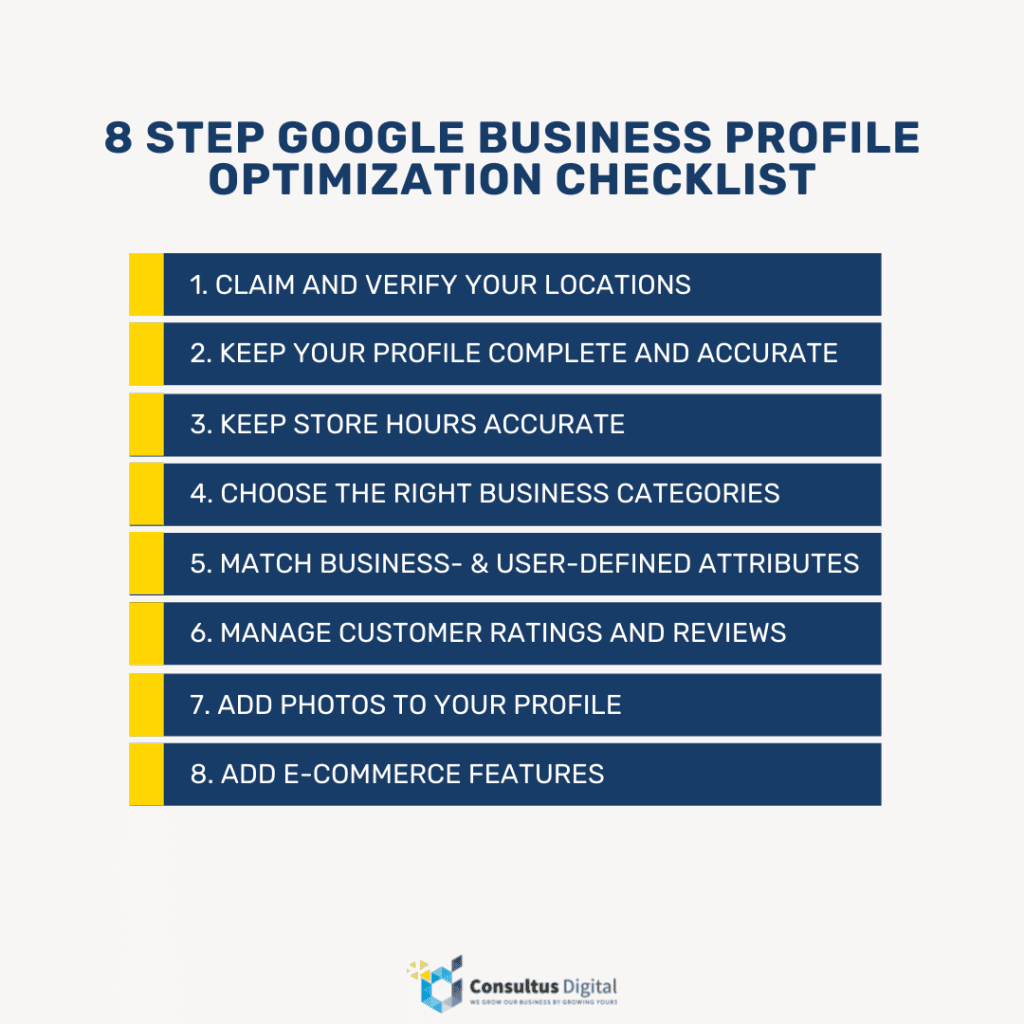
Google Business Profile Optimization: Complete 2025 Guide to Dominate Local Search
Discover how proper Google Business Profile optimization can increase your
Discover how proper Google Business Profile optimization can increase your local visibility by 200% and drive more qualified customers to your business with proven strategies that work in 2025.

Introduction
In today's digital landscape, your Google Business Profile (GBP) serves as the cornerstone of your local online presence. With over 8.5 billion searches conducted daily on Google, and 46% of all searches having local intent, optimizing your business profile isn't just an option—it's essential for survival in the competitive marketplace.
Google Business Profile optimization encompasses a comprehensive set of strategies designed to maximize your visibility in local search results, Google Maps, and the coveted local pack. When executed properly, these optimization techniques can dramatically increase your online visibility, drive more foot traffic to your physical location, and generate higher-quality leads for your business.
This guide will walk you through every aspect of Google Business Profile optimization, from initial setup and verification to advanced strategies that separate industry leaders from their competition. You'll discover actionable techniques for managing reviews, optimizing your business information, leveraging Google Posts effectively, and implementing local SEO strategies that compound your results. Whether you're a small business owner just starting out or an established company looking to dominate local search, these proven strategies will help you achieve measurable growth in 2025 and beyond.
Understanding Google Business Profile Fundamentals
Your success in local search begins with understanding how Google Business Profile functions as the digital foundation of your online presence. This section explores the critical components that make GBP optimization essential for local businesses and reveals how Google's algorithm evaluates your listing against competitors.
What Makes Google Business Profile Critical for Local Success
Your Google Business Profile represents your business's digital storefront on the world's largest search engine. When potential customers search for products or services in your area, your GBP listing appears in three key locations: Google Search results, Google Maps, and the local pack. This triple exposure opportunity makes GBP optimization one of the highest-ROI marketing activities for local businesses.
The algorithm that determines local search rankings considers over 200 factors, with your GBP optimization playing a central role. Businesses with fully optimized profiles receive 70% more location visits and 50% more website clicks compared to those with incomplete profiles. Moreover, 76% of consumers who conduct a local search visit a business within 24 hours, making your GBP the critical first touchpoint in the customer journey.
Key Components That Drive Profile Performance
Your Google Business Profile consists of several interconnected elements that work together to influence your local search visibility. The primary components include your business information (name, address, phone number), category selection, business description, photos, reviews, and posts. Each element sends signals to Google about your business relevance, authority, and trustworthiness.
Business information accuracy forms the foundation of effective optimization. Inconsistent NAP (Name, Address, Phone) information across your GBP and other online directories can confuse Google's algorithm and harm your rankings by up to 35%. Your category selection tells Google what your business does and when to show your listing, while your description provides context and keyword relevance for search queries.
How Google Evaluates Local Business Listings
Google's local search algorithm evaluates businesses based on three primary factors: relevance, distance, and prominence. Relevance measures how well your business matches a user's search query, considering factors like category selection, keywords in your business description, and the content of your posts and reviews. Distance calculates the physical proximity between the searcher and your business location.
Prominence reflects your business's overall authority and trustworthiness, incorporating factors like review quantity and quality, citation consistency across the web, website authority, and offline recognition. Businesses with consistent citations across 50+ directories see ranking improvements of 25-40%. This multifaceted evaluation system means that successful optimization requires attention to both on-profile elements and broader local SEO factors that extend beyond your GBP listing itself.
Setting Up Your Google Business Profile for Maximum Impact
Proper setup forms the foundation of all successful Google Business Profile optimization efforts. This section covers the essential elements you must configure correctly to establish credibility with Google's algorithm and provide the information potential customers need to choose your business.
Complete Business Information Optimization
The foundation of effective Google Business Profile optimization begins with providing comprehensive and accurate business information. Your business name should match exactly how it appears on your storefront, legal documents, and other online directories. Avoid keyword stuffing in your business name, as Google penalizes this practice and may suspend your listing entirely.
Your address must be precise and consistent across all online platforms. Use the exact format that appears on official postal records, including proper abbreviations and punctuation. For businesses without a physical storefront, you can set up a service area business profile, but you must still provide a real address where your business operates. Inconsistent address formatting can reduce local rankings by 15-25%.
Strategic Category Selection and Business Description
Category selection represents one of the most critical decisions in Google Business Profile optimization. Google allows one primary category and up to nine additional categories, but strategic selection requires understanding search volume, competition, and relevance to your actual services. Your primary category should represent your most important business function and the service that generates the majority of your revenue.
Research competitor categories in your area to understand the competitive landscape, but avoid selecting categories solely based on lower competition if they don't accurately represent your business. Your business description provides 750 characters to communicate your value proposition and incorporate relevant keywords naturally. Businesses with keyword-optimized descriptions see 30% more profile views than those with generic descriptions.
Hours, Services, and Attributes Configuration
Accurate hours of operation directly impact customer experience and search rankings. Google uses your posted hours to determine when to show your business in time-sensitive searches and to provide accurate information to potential customers. Update your hours immediately for holidays, special events, or permanent changes, and use the special hours feature for temporary adjustments.
The services section allows you to list specific offerings that customers might search for, creating additional keyword opportunities. Add comprehensive service listings that reflect your actual capabilities, using language that matches how customers describe these services. Attributes provide additional context about your business, such as accessibility features and payment methods, contributing to profile completeness scores that can improve rankings by 10-15%.
| Information Type | Optimization Best Practice | Common Mistake | Impact on Rankings |
|---|---|---|---|
| Business Name | Use exact legal name as it appears on storefront | Adding keywords to business name | High – Can cause suspension |
| Address | Match postal records exactly | Inconsistent formatting across platforms | High – Affects local pack rankings |
| Phone Number | Use local number, keep consistent | Frequent changes or call tracking numbers | Medium – Impacts trust signals |
| Website URL | Link to most relevant landing page | Using homepage when specific page exists | Medium – Affects user experience |
Advanced Photo and Visual Content Optimization
Visual content serves as your business's first impression for many potential customers, making strategic photo optimization a crucial component of Google Business Profile success. This section reveals how to create compelling visual narratives that drive engagement and improve search visibility.

Creating a Compelling Visual Brand Story
Visual content serves as the first impression for many potential customers, with 67% of consumers considering image quality important when making purchasing decisions. Your cover photo should immediately communicate what your business does and create a positive first impression. This image appears prominently in search results and should be high-resolution (minimum 1080×608 pixels) and professionally shot when possible.
Interior and exterior photos help customers understand your business environment and build trust before they visit. Include multiple angles of your storefront, interior spaces, and any unique features that differentiate your business. Businesses with 30+ high-quality photos receive 42% more direction requests and 35% more website clicks compared to those with fewer images.
Product and Service Photography Best Practices
Product photos directly influence purchasing decisions and should showcase your offerings in the best possible light. Each image should be high-resolution, well-lit, and focused on a single product or service. Include multiple angles when relevant and show products in use when possible to help customers envision themselves using your offerings.
For service-based businesses, action shots of your team performing services can be incredibly effective. These images humanize your business and demonstrate expertise and professionalism. Include before-and-after photos when applicable, as these provide compelling evidence of your capabilities. Service businesses with team photos see 25% higher engagement rates than those without.
Video Content Integration and Optimization
Video content on Google Business Profiles receives significantly higher engagement rates than static photos. Businesses that include videos see 40% more direction requests and 35% more website clicks compared to photo-only profiles. Google supports video uploads up to 30 seconds in length, providing an opportunity to showcase your business dynamically and engagingly.
Create videos that tell your business story effectively within the time constraint. Consider quick tours of your facility, demonstrations of your products or services in action, or brief introductions from team members. Ensure videos are professionally shot with good lighting and clear audio, as poor-quality videos can harm rather than help your business image.
Mastering Google Posts for Enhanced Engagement
Google Posts function as powerful micro-marketing tools that appear directly in your business listing, offering unique opportunities to share timely information and drive customer action. This section explores strategic posting approaches that maximize visibility and engagement.
Content Strategy for Maximum Visibility
Google Posts function as mini-advertisements that appear directly in your business listing, providing an opportunity to share timely information and promote special offers. Posts remain visible for seven days (or until an event date passes), making regular posting essential for maintaining an active presence. Develop a content calendar that includes a mix of post types: offers, events, product highlights, and general updates.
Each post should include compelling visuals, clear calls-to-action, and relevant keywords that align with your business objectives. Posts with images receive 40% more engagement than text-only posts, while those with clear calls-to-action generate 30% more clicks to your website or phone number. Businesses posting 3-4 times per week see 25% higher profile engagement than those posting less frequently.
Promotional Posts and Event Marketing
Promotional posts offer an excellent opportunity to highlight special offers, seasonal sales, and limited-time deals. These posts can include specific offer details, expiration dates, and direct links to purchase or learn more. Event posts work particularly well for businesses hosting workshops, sales events, or seasonal celebrations, as they create urgency and encourage immediate action.
Structure promotional posts with eye-catching headlines, clear value propositions, and strong calls-to-action. Include relevant hashtags and location-specific keywords to improve discoverability. Businesses using promotional posts report 45% higher conversion rates from Google Business Profile traffic compared to those relying solely on static information.
Educational and Value-Added Content
Educational posts position your business as an industry authority while providing genuine value to potential customers. Share tips, industry insights, how-to guides, and seasonal advice relevant to your business category. These posts build trust and demonstrate expertise, encouraging customers to choose your business when they're ready to purchase.
Focus on solving common customer problems or answering frequently asked questions through your posts. Include relevant keywords naturally while maintaining readability and value. Educational posts typically have longer engagement times and higher share rates, contributing to improved profile authority and search rankings over time.
Review Management and Reputation Building
Review management forms the backbone of successful Google Business Profile optimization, directly influencing both search rankings and customer trust. Google's algorithm treats reviews as one of the strongest local ranking factors, with businesses averaging 4+ stars receiving 3x more clicks than those with lower ratings. This section will guide you through proven strategies for generating positive reviews, responding professionally to all feedback, and leveraging customer testimonials to build an unshakeable online reputation.
Systematic Review Generation Strategies
Implementing a structured review request system increases positive review volume by 40% while maintaining authenticity and compliance with Google's guidelines.
The most effective review generation begins with exceptional customer service, but requires systematic follow-up to convert satisfied customers into reviewers. Create multiple touchpoints throughout the customer journey where review requests feel natural and valuable. Send follow-up emails 2-3 days after service completion, include review requests in receipts or invoices, and train staff to mention reviews during positive customer interactions. Timing matters significantly—requests made within 48 hours of positive experiences generate 60% more responses than those sent a week later.
Professional Response Techniques
Every review response serves as public marketing content that potential customers read when evaluating your business.
Respond to all reviews within 24-48 hours to demonstrate active engagement and customer care. For positive reviews, express genuine gratitude, mention specific details from their experience, and include a subtle call-to-action for future business. Negative review responses require careful crafting—acknowledge concerns without admitting fault, offer to resolve issues offline, and maintain professionalism throughout. Studies show that businesses responding to negative reviews see 33% improvement in overall rating perception among potential customers.
Review Quality Enhancement Methods
High-quality, detailed reviews carry more algorithmic weight than brief star ratings, contributing significantly to local search visibility.
Encourage customers to write detailed reviews by providing gentle guidance on what information helps future customers. Create review templates or suggestion cards that prompt customers to mention specific services, staff members, or unique aspects of their experience. Detailed reviews averaging 100+ words receive 15% more visibility in Google's algorithm compared to brief reviews. However, avoid incentivizing reviews with discounts or rewards, as this violates Google's policies and can result in review removal or business listing penalties.
Reputation Monitoring and Crisis Management
Proactive reputation monitoring prevents minor issues from escalating into major reputation crises that can devastate local search rankings.
Implement daily monitoring of your Google Business Profile and other review platforms using tools like Google Alerts, ReviewTrackers, or BirdEye. Set up notifications for new reviews, mentions of your business name, and relevant industry keywords. When negative reviews appear, assess their validity and respond appropriately—some may reveal legitimate business improvement opportunities, while others might be fake or competitor-generated. Document patterns in feedback to identify recurring issues that need operational attention.
Local SEO Integration and Citation Building
Local SEO integration amplifies your Google Business Profile optimization efforts by creating a comprehensive digital ecosystem that reinforces your business's local authority. Citations—mentions of your business name, address, and phone number across the web—serve as trust signals that Google uses to validate your business legitimacy and determine local search rankings. This strategic approach to citation building and local SEO can increase your local pack visibility by up to 200% when executed systematically.
Strategic Citation Building Campaigns
Consistent citations across high-authority directories create a foundation of trust that directly impacts Google Business Profile rankings.
Begin citation building with the major data aggregators: Infogroup, Localeze, Factual, and Foursquare, as these feed information to hundreds of smaller directories automatically. Focus on industry-specific directories that carry more weight for your business type—medical practices benefit from Healthgrades, restaurants from Yelp and TripAdvisor, and professional services from Better Business Bureau listings. Maintain absolute consistency in NAP (Name, Address, Phone) formatting across all citations, as even minor variations can confuse Google's algorithm and dilute your local authority signals.
Local Content Marketing Integration
Location-specific content creation establishes topical authority while supporting Google Business Profile optimization through increased local relevance signals.
Develop content that naturally incorporates local keywords, landmarks, and community events while providing genuine value to your audience. Create neighborhood guides, local industry reports, or community involvement stories that demonstrate deep local knowledge and engagement. This content should live on your website but can be promoted through Google Posts to create a comprehensive local content strategy. Businesses publishing 2-3 local-focused blog posts monthly see 45% better local search performance than those without location-specific content strategies.
Schema Markup and Technical Optimization
Proper schema markup helps Google understand and display your business information more effectively in search results.
Implement LocalBusiness schema markup on your website to provide structured data that complements your Google Business Profile information. This markup should include all relevant business details: operating hours, accepted payment methods, service areas, and customer review aggregates. Use Google's Structured Data Testing Tool to validate your markup implementation and ensure error-free processing. Businesses with proper schema markup experience 30% higher click-through rates from search results compared to those without structured data implementation.
Multi-Location Management Strategies
Businesses with multiple locations require sophisticated management strategies to maintain consistent optimization across all profiles.
For multi-location businesses, create location-specific landing pages that support each individual Google Business Profile with unique, relevant content. Avoid duplicate content across location pages—instead, customize each page with location-specific information, staff details, and community involvement. Implement a centralized citation management system to ensure consistency across all locations while allowing for location-specific customizations. Use Google Business Profile's bulk management tools for efficient updates across multiple listings, but regularly audit each location individually for accuracy and optimization opportunities.
Analytics, Insights, and Performance Tracking
Google Business Profile insights provide invaluable data for measuring optimization success and identifying improvement opportunities. These analytics reveal how customers discover your business, what actions they take after viewing your profile, and which optimization efforts generate the highest return on investment. Understanding and acting on these insights can increase profile engagement by 150% while providing clear direction for ongoing optimization efforts.

Key Performance Metrics Analysis
Tracking the right metrics enables data-driven decisions that compound Google Business Profile optimization results over time.
Monitor primary metrics including search views, map views, profile actions (calls, direction requests, website clicks), and photo views. Search views indicate how often your business appears in relevant searches, while map views show location-based discovery. Profile actions represent conversion metrics—the ultimate goal of optimization efforts. Photo views reveal which visual content resonates most with potential customers, informing future content creation strategies. Businesses tracking these metrics weekly see 25% better optimization results than those reviewing data monthly or less frequently.
Customer Journey Mapping Through Insights
Google Business Profile insights reveal the complete customer discovery and engagement journey, enabling optimization of each touchpoint.
Analyze how customers find your business—through direct searches for your business name, discovery searches for your services, or branded searches including your business name. This data informs keyword strategy and competitive positioning. Track the progression from profile views to actions taken, identifying drop-off points where potential customers disengage. Understanding peak engagement times helps optimize posting schedules and staff availability for maximum impact during high-traffic periods.
Competitive Benchmarking and Market Analysis
Regular competitive analysis through insights data reveals market opportunities and optimization gaps that can be leveraged for competitive advantage.
Compare your performance metrics against industry benchmarks and local competitors using tools like SEMrush Local or BrightLocal. Identify competitors with higher engagement rates and analyze their profiles for optimization techniques you can adapt. Monitor seasonal trends in your insights data to prepare for recurring patterns and capitalize on predictable demand fluctuations. Businesses conducting monthly competitive analysis achieve 40% better local search performance than those operating without market context.
| Metric Type | Tracking Frequency | Primary Insight | Optimization Action | Impact Level |
|---|---|---|---|---|
| Search Views | Weekly | Keyword relevance | Category and description optimization | High |
| Profile Actions | Daily | Conversion effectiveness | Call-to-action optimization | Very High |
| Photo Views | Bi-weekly | Visual content performance | Photo strategy refinement | Medium |
| Direction Requests | Weekly | Location visibility | Local SEO enhancement | High |
ROI Measurement and Optimization Prioritization
Quantifying the return on investment from Google Business Profile optimization efforts ensures resources focus on highest-impact activities.
Establish baseline metrics before implementing optimization changes, then track improvements over 30, 60, and 90-day periods. Calculate cost-per-acquisition from GBP traffic by tracking website conversions, phone calls, and in-store visits generated through profile interactions. Use UTM parameters on your website URL to accurately attribute traffic and conversions to your Google Business Profile. Businesses measuring ROI systematically achieve 60% better optimization results by focusing efforts on proven high-impact strategies rather than scattered optimization attempts.
Common Mistakes and Troubleshooting Guide
Even experienced marketers encounter challenges when optimizing Google Business Profiles, with common mistakes potentially undermining months of optimization efforts. Understanding these pitfalls and their solutions prevents costly errors while accelerating your path to local search dominance. This troubleshooting guide addresses the most frequent optimization mistakes that can harm rankings, violate Google's guidelines, or waste valuable time and resources.
Profile Suspension and Penalty Recovery
Google Business Profile suspensions affect 15% of businesses annually, but most can be successfully appealed with proper documentation and corrective action.
Profile suspensions typically result from guideline violations such as fake reviews, incorrect business information, or prohibited business types. When suspension occurs, immediately review Google's quality guidelines to identify potential violations. Gather supporting documentation including business licenses, utility bills, and photos proving your business legitimacy. Submit a reinstatement request through Google Business Profile Help, providing clear explanations of corrective actions taken. The appeal process averages 2-4 weeks, during which maintaining accurate information across other online directories helps preserve local search presence.
Information Inconsistency Resolution
NAP (Name, Address, Phone) inconsistencies across online platforms create algorithmic confusion that can reduce local search visibility by up to 40%.
Conduct comprehensive citation audits using tools like Moz Local or BrightLocal to identify inconsistencies across directories, social media platforms, and your website. Create a master spreadsheet documenting the correct business information format, then systematically update all online mentions to match exactly. Pay special attention to address formatting, phone number presentation, and business name variations. Address abbreviations like "St." versus "Street" or "Ave" versus "Avenue" must remain consistent across all platforms to avoid confusing Google's data aggregation systems.
Review Management Compliance Issues
Violating Google's review policies can result in review removal, profile penalties, or complete business listing suspension.
Never incentivize reviews with discounts, payments, or gifts, as this violates Google's guidelines and creates artificial review patterns that algorithms can detect. Avoid asking friends, family, or employees to leave reviews, as Google can identify these relationships through account connections and location data. Don't respond to fake negative reviews by disputing factual claims publicly—instead, flag inappropriate reviews through Google's reporting system while responding professionally to maintain your business reputation. Focus on generating authentic reviews through exceptional service rather than gaming the system.
Technical Integration Problems
Common technical issues can prevent Google from properly indexing and displaying your business information, reducing local search effectiveness.
Ensure your website's structured data markup matches your Google Business Profile information exactly, as discrepancies can create trust issues with Google's algorithm. Verify that your website loads quickly and provides mobile-friendly user experience, as Google considers website quality when ranking local businesses. Check that your Google Business Profile URL correctly redirects to the most relevant page on your website rather than generic homepage. Monitor for duplicate listings that can split your review authority and confuse potential customers, requesting removal of unauthorized duplicates through Google's support channels.
Pro Tip: Set up monthly audits of your Google Business Profile using a standardized checklist to catch issues before they impact your local search performance. Prevention is always more effective than recovery when managing local search optimization.
. When promoting events, include specific dates, times, and location details to help customers plan their attendance. Event posts can drive significant traffic and engagement, particularly for businesses that regularly host workshops, sales events, or community gatherings.
Use promotional posts strategically to highlight your competitive advantages and unique value propositions. Include specific details about discounts, limited-time offers, and exclusive deals that create urgency and encourage immediate action. Track the performance of different promotional approaches to identify what resonates most with your audience.
Product Spotlights and Service Highlights
Product spotlight posts allow you to feature specific items or services with detailed descriptions, pricing information, and compelling visuals. These posts work particularly well for retail businesses, restaurants, and service providers with diverse offerings. Focus on your best-selling or highest-margin products to maximize the impact of these posts.
Service highlight posts should emphasize the benefits and outcomes customers can expect rather than just listing features. Include customer testimonials, before-and-after examples, or specific results achieved through your services. This approach builds credibility and helps potential customers understand the value you provide.
Regular product and service posts keep your business profile fresh and provide search engines with new content to index. Aim to highlight different aspects of your business regularly, ensuring comprehensive coverage of your offerings over time while avoiding repetitive content that might reduce engagement.
Review Management and Response Strategies
Building a Systematic Review Generation Process
Review generation requires a proactive, systematic approach that integrates seamlessly into your customer service workflow. The most successful businesses don't wait for reviews to happen naturally—they create structured processes that encourage satisfied customers to share their experiences while the positive interaction is still fresh in their minds.
Timing plays a crucial role in review generation success. Research shows that customers are most likely to leave positive reviews within 24-48 hours of a positive experience. Implement follow-up systems that reach out to customers during this optimal window through email, text messages, or in-person requests. Train your staff to recognize satisfied customers and make review requests part of their standard customer interaction protocol.
Multiple touchpoints increase your review generation success rate significantly. Use a combination of digital and physical prompts, including email signatures with review links, QR codes on receipts, table tents in waiting areas, and verbal requests from staff members. The key is making the review process as simple as possible while providing multiple opportunities for engagement.
Professional Response Techniques for All Review Types
Every review response serves as public marketing content that influences potential customers' perceptions of your business. Your response strategy should treat each review as an opportunity to demonstrate professionalism, address concerns, and showcase your commitment to customer satisfaction. Develop response templates that maintain consistency while allowing for personalization based on specific review content.
Positive review responses should be brief, genuine, and specific to the reviewer's experience. Thank customers by name when possible, reference specific details they mentioned, and invite them to return or try other services. Avoid generic responses that could apply to any business, as these appear impersonal and reduce the impact of your customer service efforts.
Negative review responses require careful consideration and strategic messaging. Respond promptly (within 24-48 hours), acknowledge the customer's concerns, apologize when appropriate, and offer to resolve issues offline. Never argue with reviewers publicly or provide defensive responses that make your business appear unprofessional or difficult to work with.
Leveraging Reviews for Business Improvement
Reviews provide invaluable insights into customer perceptions and operational improvements that can enhance your business performance. Analyze review patterns to identify recurring themes, both positive and negative, that reveal strengths to leverage and weaknesses to address. This feedback loop creates opportunities for continuous improvement that directly impacts customer satisfaction and business growth.
Track specific metrics mentioned in reviews, such as wait times, product quality, staff friendliness, and facility cleanliness. When multiple reviews mention similar issues, prioritize addressing these concerns as they likely represent broader customer experience problems. Document improvements made based on review feedback and communicate these changes to demonstrate responsiveness to customer input.
Use positive review themes to inform your marketing messaging and staff training programs. When customers consistently praise specific aspects of your business, incorporate these strengths into your promotional materials and ensure all team members understand and deliver on these valued attributes.
FAQ
Q: How often should I update my Google Business Profile information?
Review and update your Google Business Profile monthly to ensure accuracy and maintain optimal performance. Check for changes in hours, contact information, services, and business details. Update photos quarterly or whenever you have new products, renovations, or seasonal changes to showcase.
Q: What's the minimum number of reviews needed to see ranking improvements?
Most businesses begin seeing ranking improvements with 15-25 high-quality reviews, though the impact varies by industry and location competition. Focus on generating 3-5 reviews monthly through consistent customer outreach rather than pursuing large quantities quickly, as Google values review velocity and authenticity.
Q: How do I handle fake negative reviews on my profile?
Report suspicious reviews through Google's review flagging system, providing specific evidence of policy violations. Document fake reviews with screenshots and continue generating legitimate positive reviews to dilute their impact. Never purchase fake positive reviews, as Google's detection systems can penalize your entire profile.
Q: When is the best time to post Google Posts for maximum visibility?
Post during your industry's peak search times, typically Tuesday through Thursday between 10 AM and 2 PM for most businesses. Service-based businesses often see better engagement on weekday mornings, while retail businesses may benefit from evening and weekend posting when customers are planning purchases.
Q: Where can I find professional photos if I can't hire a photographer?
Use smartphone cameras with good lighting, avoiding flash and shooting during golden hour for exterior photos. Google's Business Profile offers free photo shoots in select markets. Consider local photography students or community colleges for affordable professional options, or use high-quality stock photos as temporary placeholders.
Q: Who should manage Google Business Profile optimization for my company?
Assign GBP management to someone who understands your business operations and customer interactions daily. This could be a marketing coordinator, office manager, or business owner. Ensure they have access to customer feedback and can respond to reviews promptly and professionally.
Q: What are the most common Google Business Profile mistakes that hurt rankings?
The biggest mistakes include inconsistent NAP information across platforms, choosing incorrect primary categories, ignoring customer reviews, using low-quality photos, and failing to update business hours for holidays. Keyword stuffing in business names and descriptions also triggers penalties.
Q: How do I measure the success of my Google Business Profile optimization efforts?
Track metrics through Google Business Profile Insights, including search views, map views, website clicks, direction requests, and phone calls. Monitor review quantity and average rating monthly. Use Google Analytics to track traffic from Google My Business and measure conversion rates from GBP visitors.
Q: What's the future of Google Business Profile optimization in 2025?
Google continues emphasizing user experience signals, authentic customer interactions, and mobile-first optimization. Expect increased importance of video content, messaging features, and integration with Google's AI systems. Voice search optimization and local inventory management will become increasingly critical for competitive advantage.
Q: How does Google Business Profile compare to other local directory listings?
Google Business Profile drives significantly more traffic than other directories due to Google's search dominance. While maintaining consistent listings on Yelp, Facebook, and industry-specific directories remains important for citation building, GBP should receive 70-80% of your local listing optimization efforts and budget.
Conclusion
Google Business Profile optimization represents one of the most powerful and cost-effective marketing strategies available to local businesses today. When implemented correctly, these optimization techniques can transform your online visibility, drive qualified traffic to your location, and generate measurable revenue growth. The businesses that dominate local search results in 2025 will be those that treat their Google Business Profile as a comprehensive marketing platform rather than a simple directory listing.

The key takeaways for successful Google Business Profile optimization include:
- Complete accuracy and consistency across all business information and online citations
- Strategic visual content that showcases your business professionally and authentically
- Proactive review management that turns customer feedback into competitive advantages
- Regular content updates through Google Posts that keep your profile fresh and engaging
The future of local search continues evolving toward more personalized, AI-driven experiences that prioritize businesses providing exceptional customer experiences and comprehensive online information. Businesses that invest in thorough Google Business Profile optimization now will build sustainable competitive advantages that compound over time, creating lasting growth opportunities in an increasingly digital marketplace.
Partner with Bridgely for Success
Mastering Google Business Profile optimization requires ongoing attention to detail, strategic content creation, and systematic review management—challenges that many business owners find overwhelming while trying to run their daily operations. The technical aspects of local SEO, photo optimization, and review response strategies demand expertise and consistent execution to achieve the ranking improvements and customer engagement levels discussed throughout this guide.
Bridgely specializes in comprehensive Google Business Profile optimization, handling everything from initial setup and verification to ongoing content management and review response strategies. Our team manages the complete optimization process, including strategic category selection, professional photo curation, systematic Google Posts scheduling, and proactive review generation campaigns that drive measurable results. We understand the nuances of local search algorithms and implement proven strategies for NAP consistency, citation building, and competitive analysis that position your business for long-term success.
Rather than struggling with the complexities of local SEO and profile management on your own, let Bridgely's expertise transform your Google Business Profile into a powerful lead generation engine. Visit https://www.bridgely.io to discover how our specialized Google Business Profile optimization services can increase your local visibility, drive more qualified customers to your business, and establish the strong online presence your company needs to thrive in 2025.